
 EN
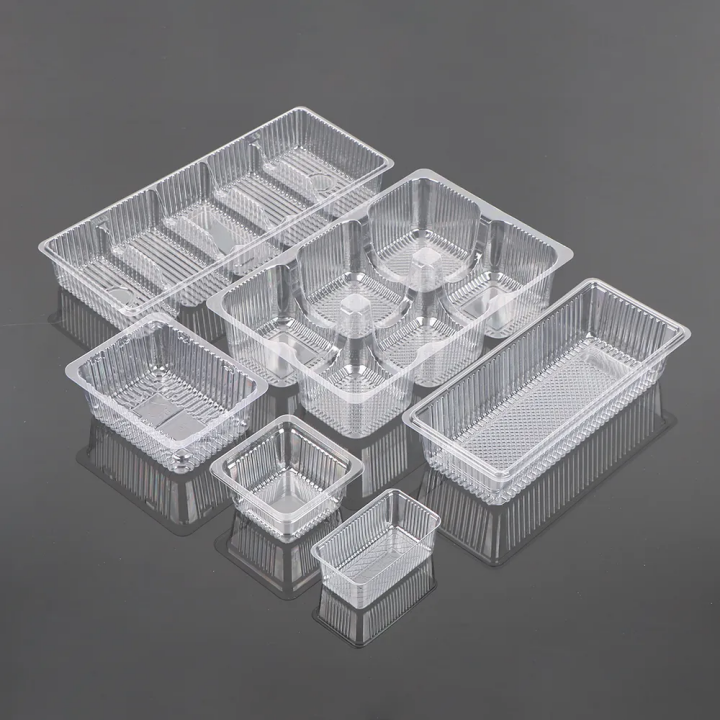
A mid-size bakery in the Midwest took a large holiday order two seasons ago and nearly missed it. The team scaled production from a few hundred trays a day to several thousand. The existing wholesale cookie trays, bought mainly on price, started failing under the new load. Cookies stuck to the base, corners snapped during stacking, and a share of the shipment arrived at the distributor with broken lids. The episode cost more in rushed re-packing and lost trust than the savings from the cheap tray ever delivered.
The holiday order that stuck together
During the peak run, warm cookies placed into thin trays released moisture that re-condensed on the lid and pooled at the base. Without a proper release surface, the cookie base fused to the tray wall. Staff had to pry product free by hand, slowing the line and bruising the goods. The failure was not the recipe. It was the tray spec.
What the broken corners cost
Corner fractures looked minor but compounded. Stacked cases shifted, lids popped, and the distributor flagged the lot. Re-work ate a full shift, and the account demanded a corrective plan before the next order. That is the hidden price of wholesale cookie trays chosen only by unit cost.
The Risk of Sticking and Cracking at Scale
Small tray flaws stay invisible at low volume. At wholesale scale they multiply into line stops, waste, and claims.
Production line jams
A tray that flexes wrongly jams automatic denesters and fillers. Every jam stops the conveyor, and stoppages during a timed production window cascade into late shipments. Stick-prone surfaces also slow manual loading, because each cookie needs coaxing rather than a clean drop.
Customer complaints and returns
Cracked corners and stuck cookies reach the buyer as a quality signal, not a packaging footnote. Distributors remember whether a supplier's wholesale cookie trays arrive intact. Returns and chargebacks follow, and the brand pays twice: once in replacement, once in reputation.
Why Trays Stick or Break: The Material Science
Sticking and breaking trace to resin choice, wall design, and processing, not to chance.
Release behavior of PP vs PET
Polypropylene (PP) offers a naturally lower surface energy than PET, which helps cookies release instead of adhere. PET gives clarity and rigidity but needs coating or texture for release. The right wholesale cookie trays match resin to product: PP for soft or warm bakes, PET where see- through display matters most.
Wall thickness and corner design
Thin walls crack at corners where stress concentrates. Radiused corners and a slightly heavier gauge distribute load and survive stacking. Anti-scratch and anti-fog finishes also matter for display. Specifying wall thickness by product weight, not by a single catalogue number, prevents most breakage.
Standards That Separate Real Food Trays
Food-contact trays must meet migration and hygiene rules regardless of price.
FDA 21 CFR 177 and EU 10/2011
In the United States, FDA 21 CFR 177 covers the resins allowed for food contact, including PP and PET, with limits on extractables. The EU Regulation (EU) 10/2011 sets specific migration limits for plastic materials. Wholesale cookie trays without these compliance statements carry unknown risk that no price saving justifies.
How to Specify Wholesale Cookie Trays That Perform
A short checklist beats a low quote when volume is high.
A five-point buyer checklist
- Confirm food-contact compliance for the resin.
- Match wall gauge to cookie weight and stack height.
- Verify release performance with a warm-product test.
- Check corner radius and lid snap strength.
- Request anti-fog and scratch resistance for display.
Hengmaster's team provides these specs on request, which makes comparison real.
Use and care that prevents sticking
Let baked goods cool before tray loading to cut condensation. Store trays in a dry, moderate environment so static and moisture stay low. Denest with calibrated air pressure rather than force. Rotate stock by FIFO. These steps keep wholesale cookie trays performing long after the purchase order closes.
Frequently Asked Questions
Question: What material is best for wholesale cookie trays that won't stick?
Answer: Polypropylene (PP) typically releases baked goods more easily than PET because of lower surface energy, which reduces sticking when cookies are still warm. PET offers better clarity for display but usually needs a release coating. The right choice depends on whether the priority is non-stick performance or visible presentation on the shelf.
Question: How thick should cookie trays be to avoid breaking?
Answer: Wall thickness should match the cookie weight and stack height rather than follow a fixed number. Light cookies may do well at modest gauge, while heavy or stacked loads need thicker walls and radiused corners to spread stress. Requesting the gram weight tolerance from the supplier prevents corner fractures during transport and storage.
Question: Are clear cookie trays safe for food contact?
Answer: Clear PET trays are food-safe when they meet FDA 21 CFR 177 or EU 10/2011 with migration testing. Clarity comes from the resin, not from added coatings that could leach. Buyers should ask for the compliance certificate and the specific migration report before using clear wholesale cookie trays for direct food contact.
Question: Can wholesale cookie trays go in the freezer?
Answer: Standard thin trays may crack in freezing temperatures because the resin becomes brittle. If freezing is needed, specify impact-modified PP rated for low temperature. Not every
wholesale cookie tray handles cold, so confirm the temperature rating with the supplier and avoid assuming room-temperature specs apply to frozen storage.
Question: How should trays be stored before use?
Answer: Keep wholesale cookie trays in a dry, cool space away from direct sunlight and heat, which can warp thin walls and build static that attracts dust. Rotate stock using FIFO so older inventory ships first. Clean, flat storage preserves the denesting performance and reduces sticking when the line finally loads them.
Question: What certification proves a tray is food grade?
Answer: Food grade status is shown by FDA 21 CFR or EU 10/2011 compliance, a migration test report, and often ISO 22000 or HACCP system evidence. In North America, NSF/ANSI 51 adds material acceptance for food equipment. Requesting these documents lets buyers confirm wholesale cookie trays meet safety rules, not just visual expectations.
Request Wholesale Cookie Tray Specs and Samples from Hengmaster
Hengmaster manufactures PP and PET cookie trays with radiused corners, release-tested surfaces, and anti-fog options, backed by FDA 21 CFR and EU 10/2011 compliance documents. Send us your cookie weight, stack height, and order volume, and our team will recommend the right tray within your budget.